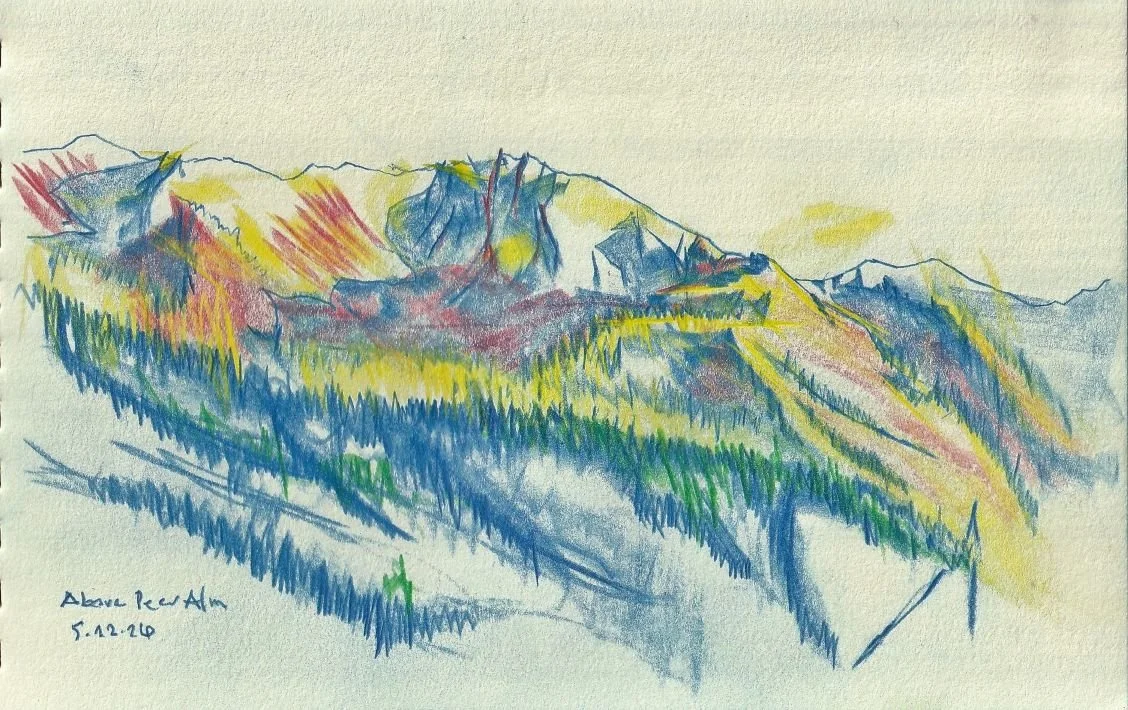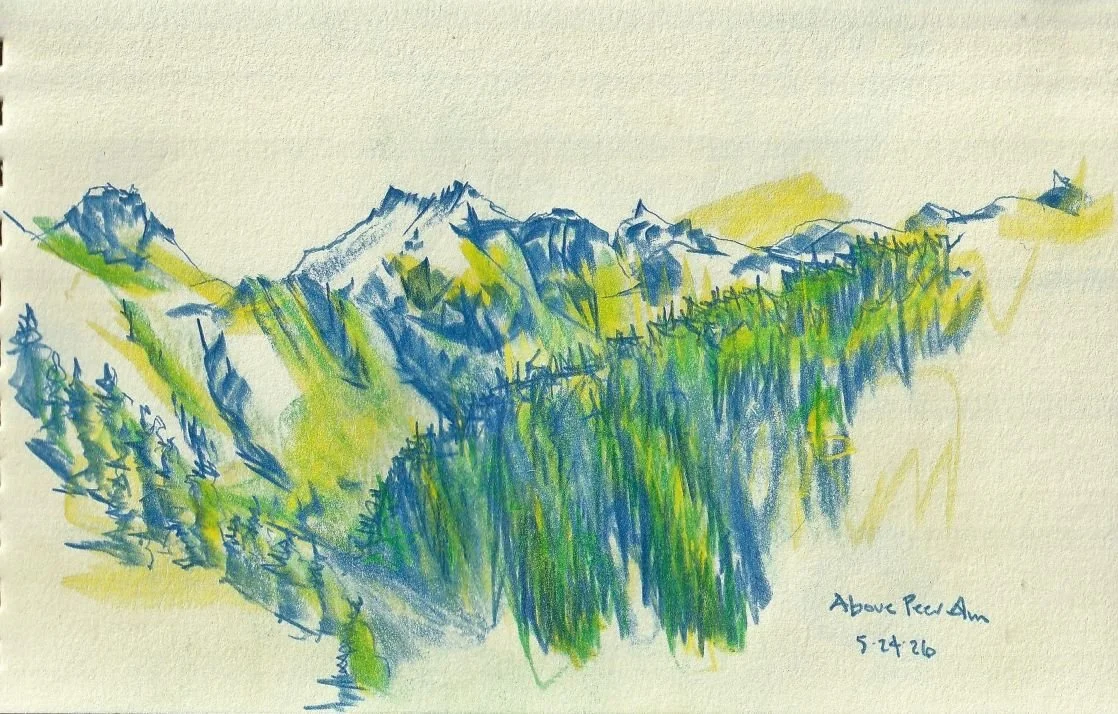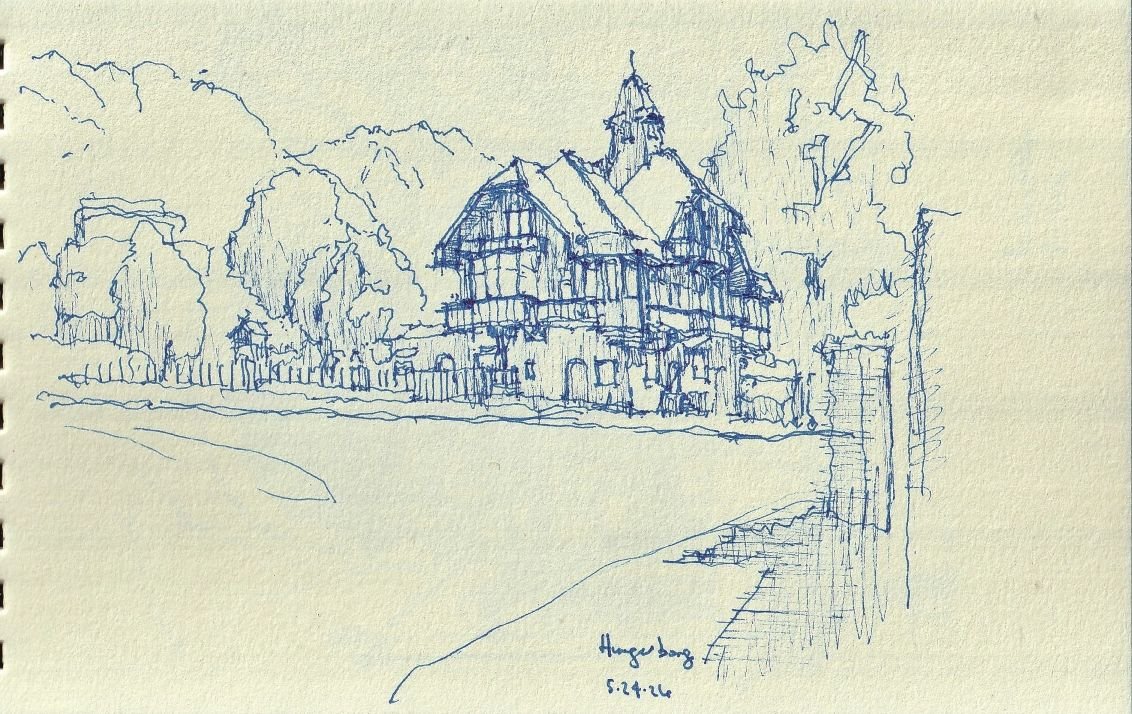
We hiked from a Hutte above Innsbruck for three glorious sheep-hilled sunny peak inspired days. Hearty meals and sound sleep. Then I spent three solo days prowling in Rome (again), where the 16th C Baroque story was initiated by Sixtus V, hiring Michelangelo, making careers for Bernini and my hero Francesco Borromini.
My hands were happy!
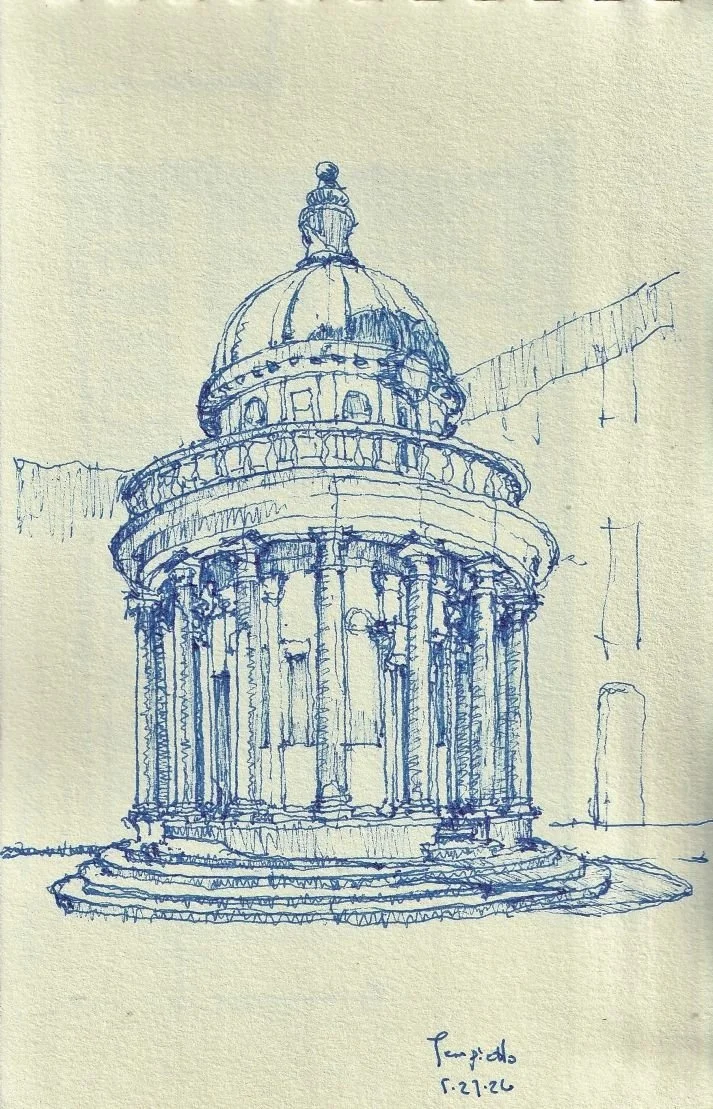
Bramante created this tiny perfect chapel (emphasis on perfection); small so only 5 people fit comfortably inside.
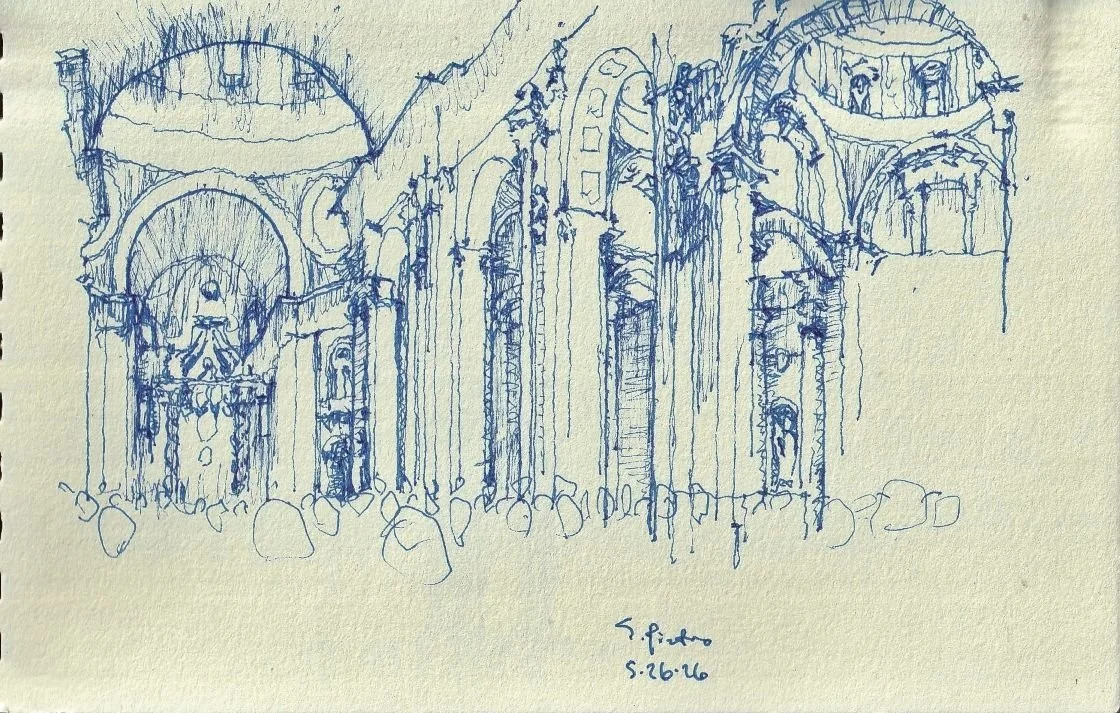
I stopped to draw immediately inside the entry doors, because Michelangelo and his illustrious partners stop one in their tracks.
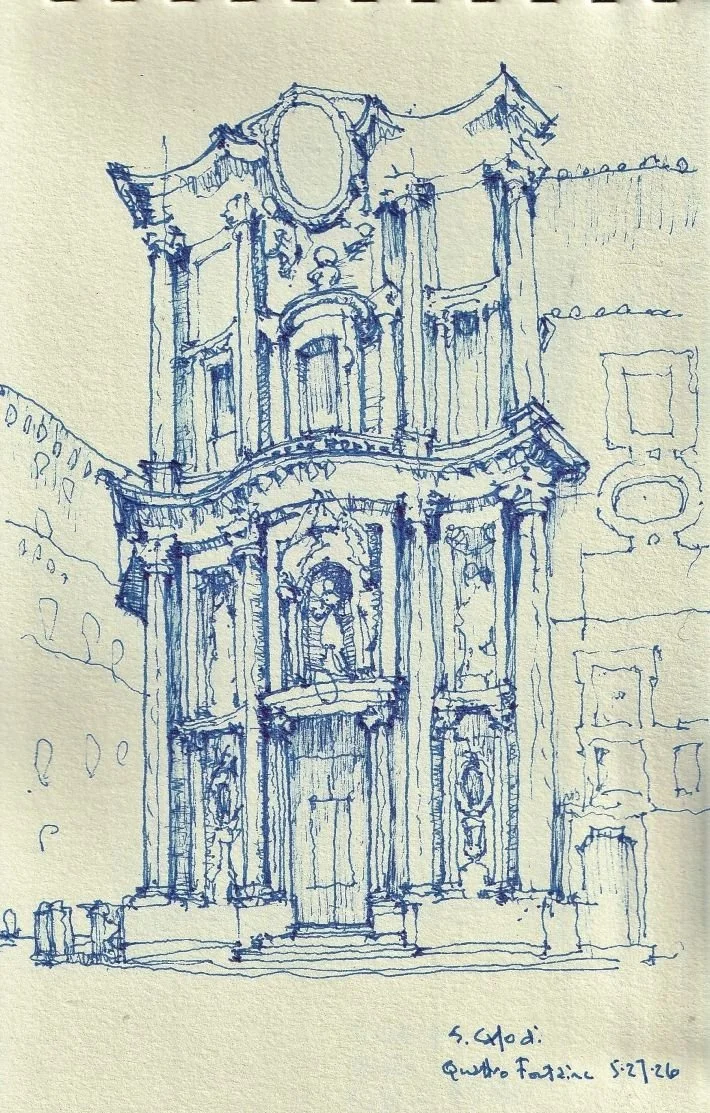
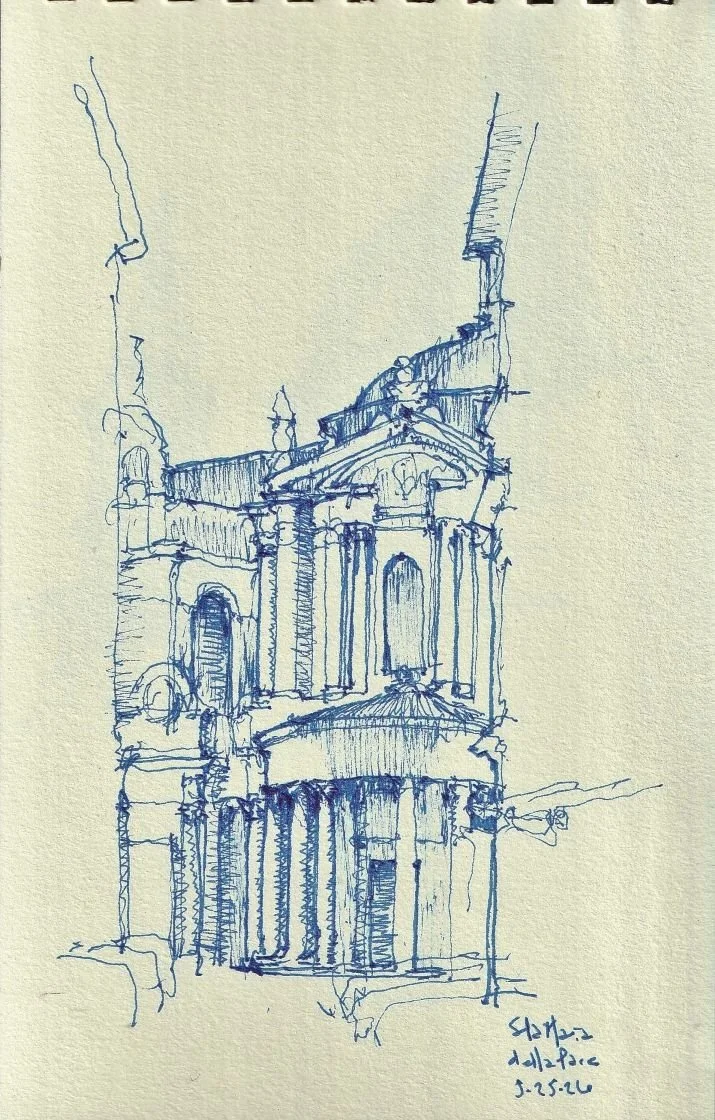
I met another architect sketching this in watercolor from the four fountains at the street crossing; so I shuffled over directly in front of the facade. This church is so incredibly active with geometry, exaggerating scale of inside and out. A true drawing challenge!
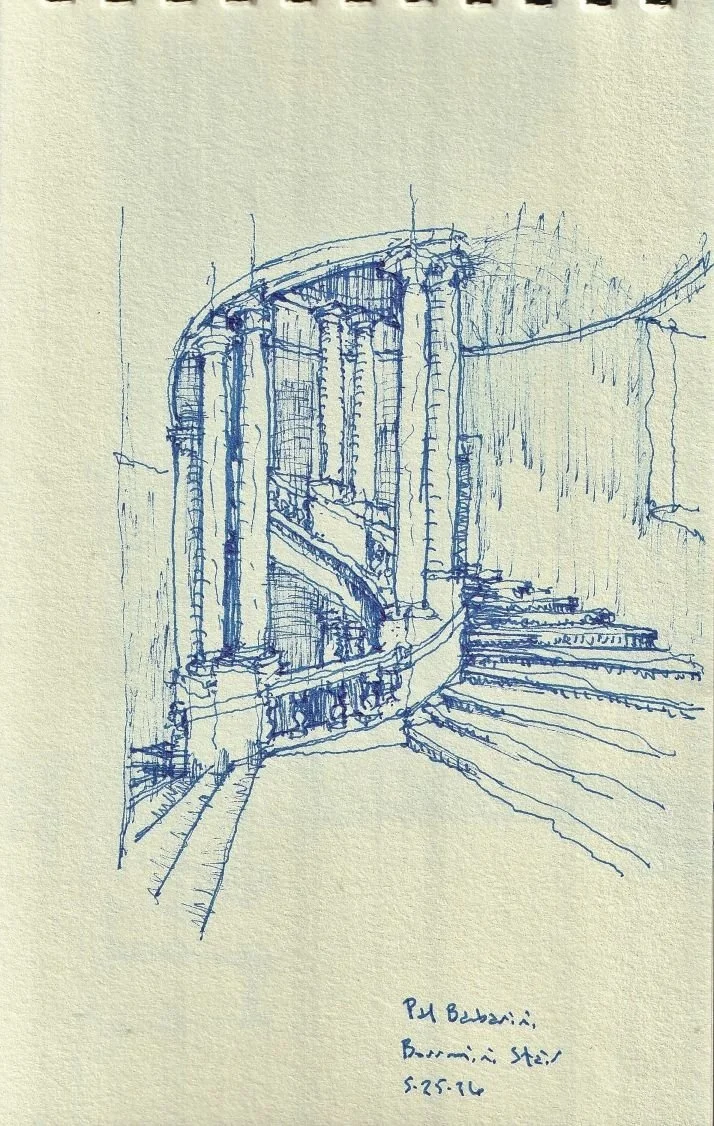
One exits the museum down this helical oval stair, swooping down and up using the most ambitious geometry!
I love this little church in a special way because the architect bent every surface to create illusion of a grand axis and center when the site only offered a twisted angular alley-way. His control and spirit express what cleverness can do.
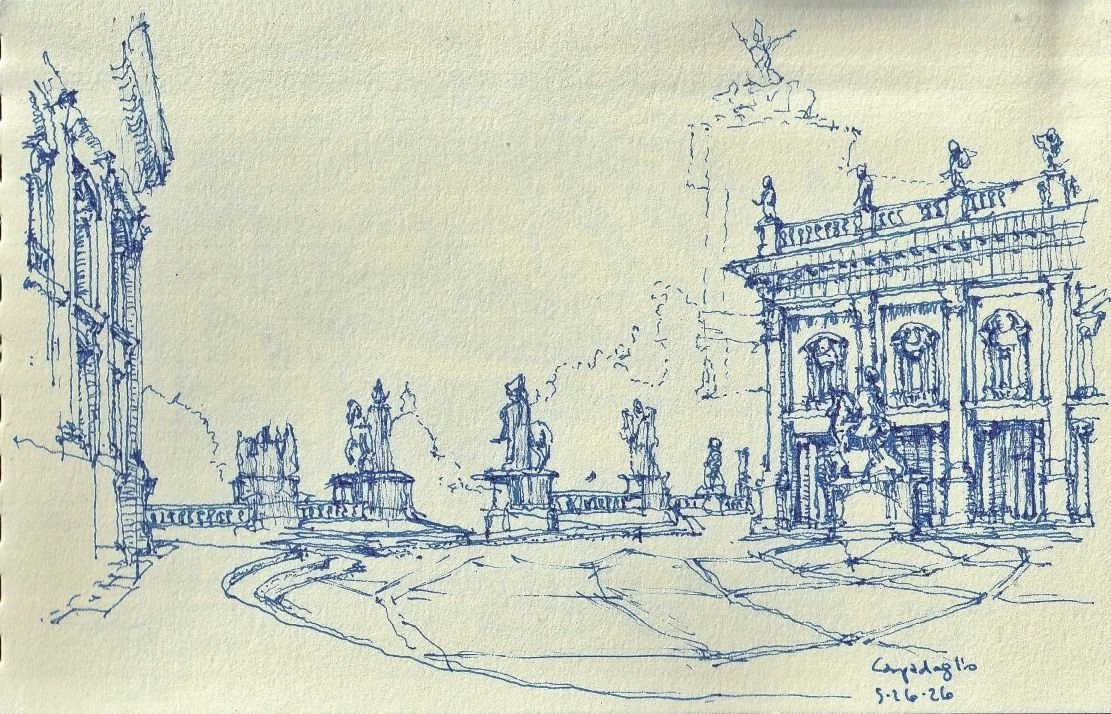
This plaza frames a vista distorted by Michelangelo’s angled facades which force the downhill view into a shrinkage which exaggerates distance; the uphill view conversely magnifies the stature of his Senate Palace.
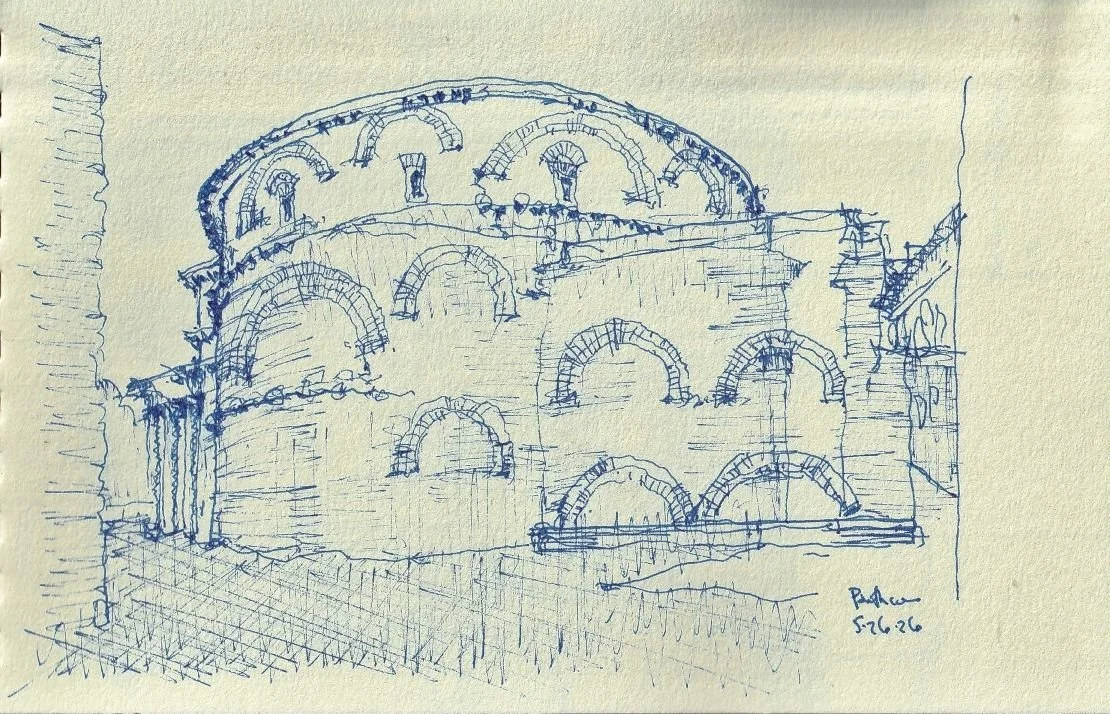
Emperor Hadrian liked roundness
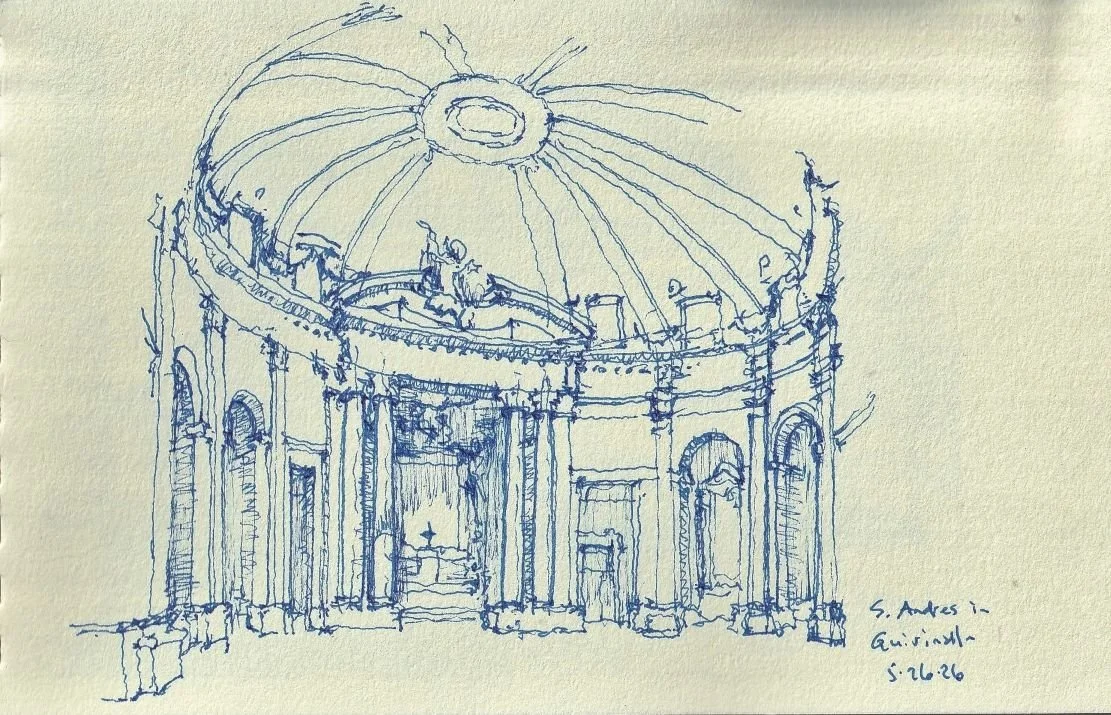
Bernini’s oval church is entered on the shape’s short axis, with showing calm dignity and joy equal to Borromini’s San Carlo down the block, but none of that craziness.
A sunset view from the porch of our Inn
A breakfast table view from our last morning before these majestic ridges
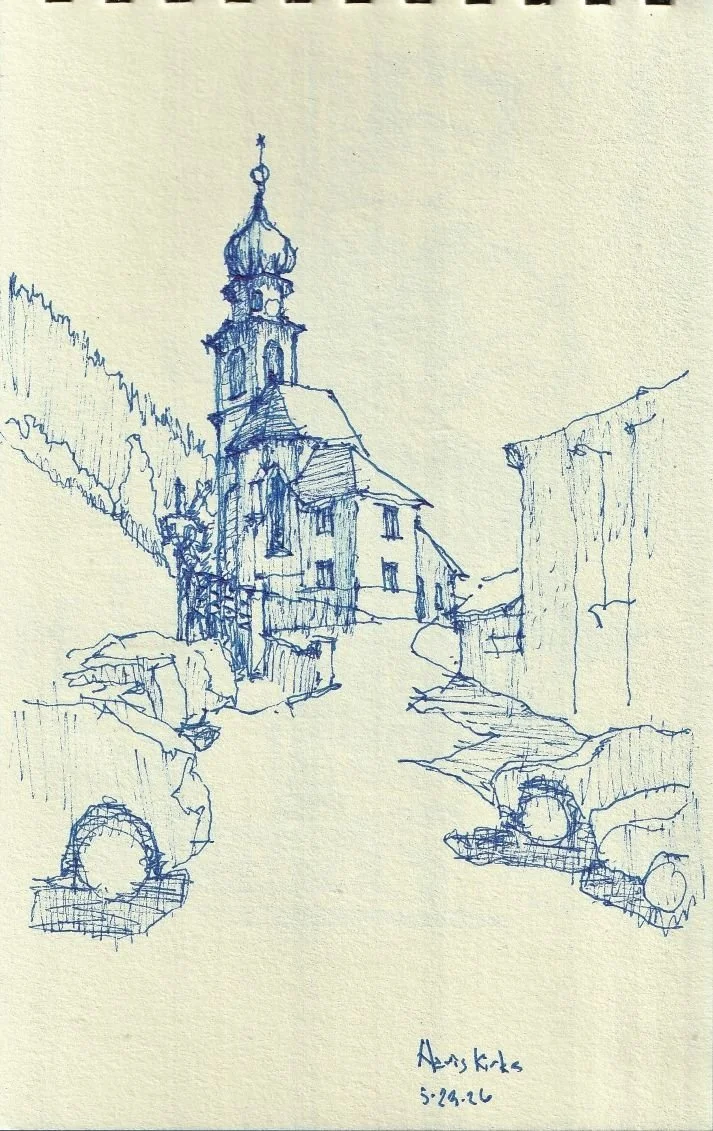
A local military holiday celebration seemed to be underway up in this little church, with uniforms and colorful dresses. The town of Narvis was our gateway into the Alps.
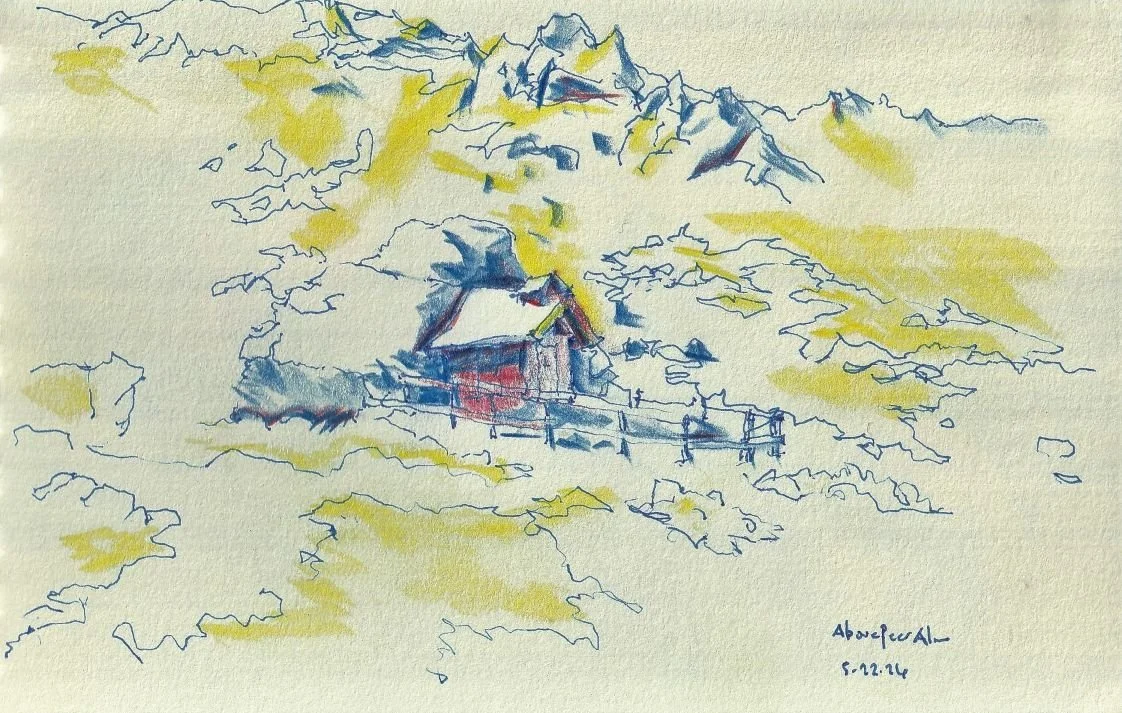
We had a long hard climb up snowy ridges and found this tiny church, but not yet open for the summer season’s visitors. We peeked in the windows anyway.
It’s nice to see these regional construction techniques employed and standing over the past century. The school was apparently opened right after the end of WWI to help traumatized children.
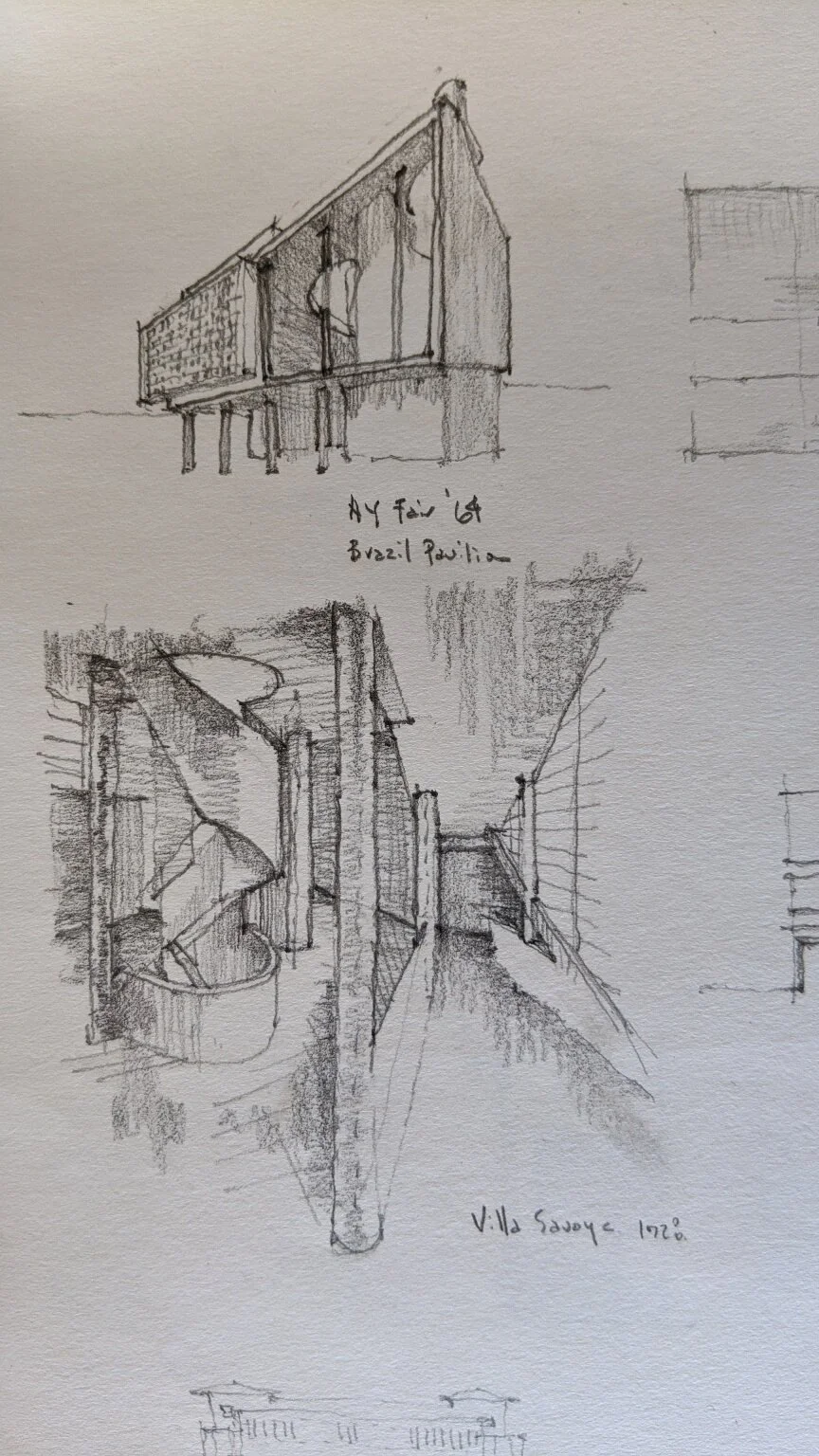
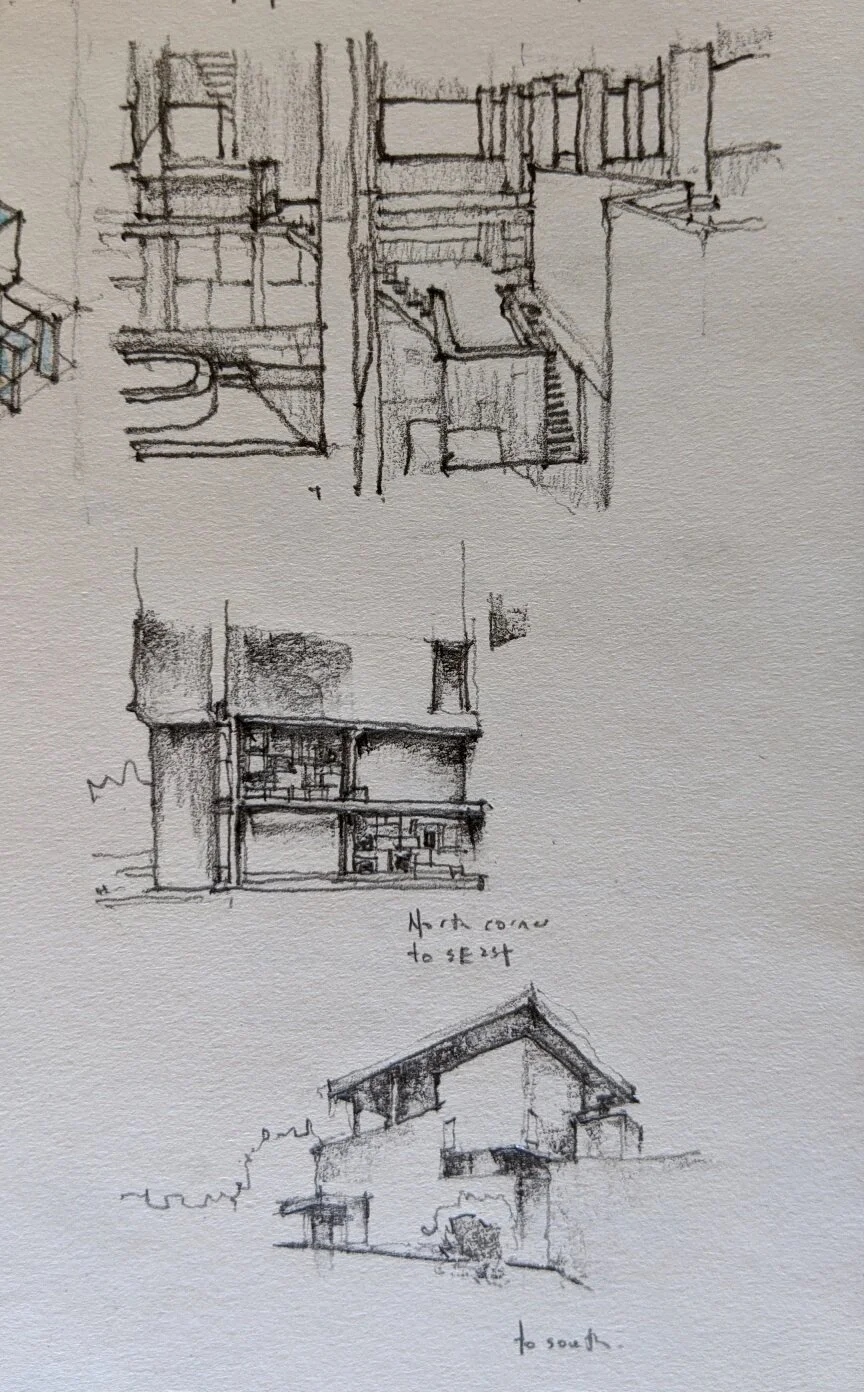
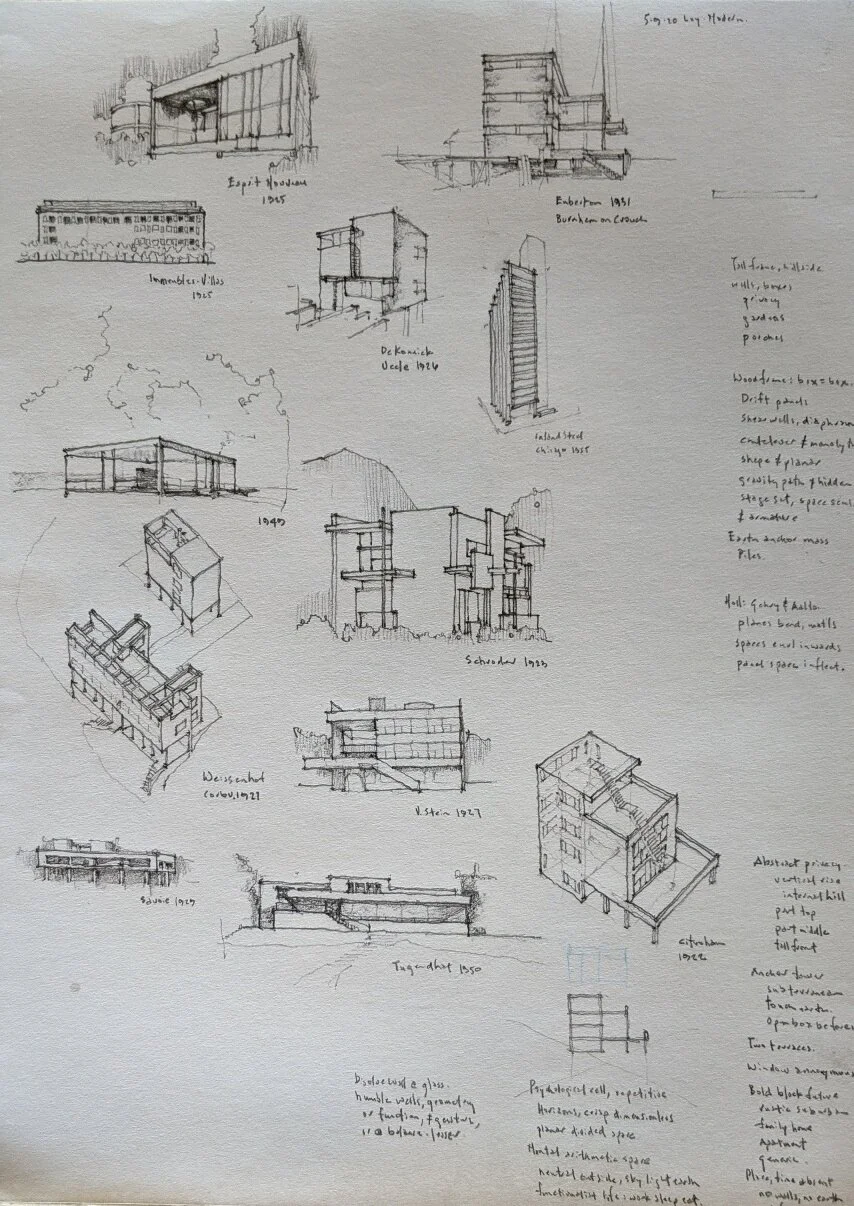
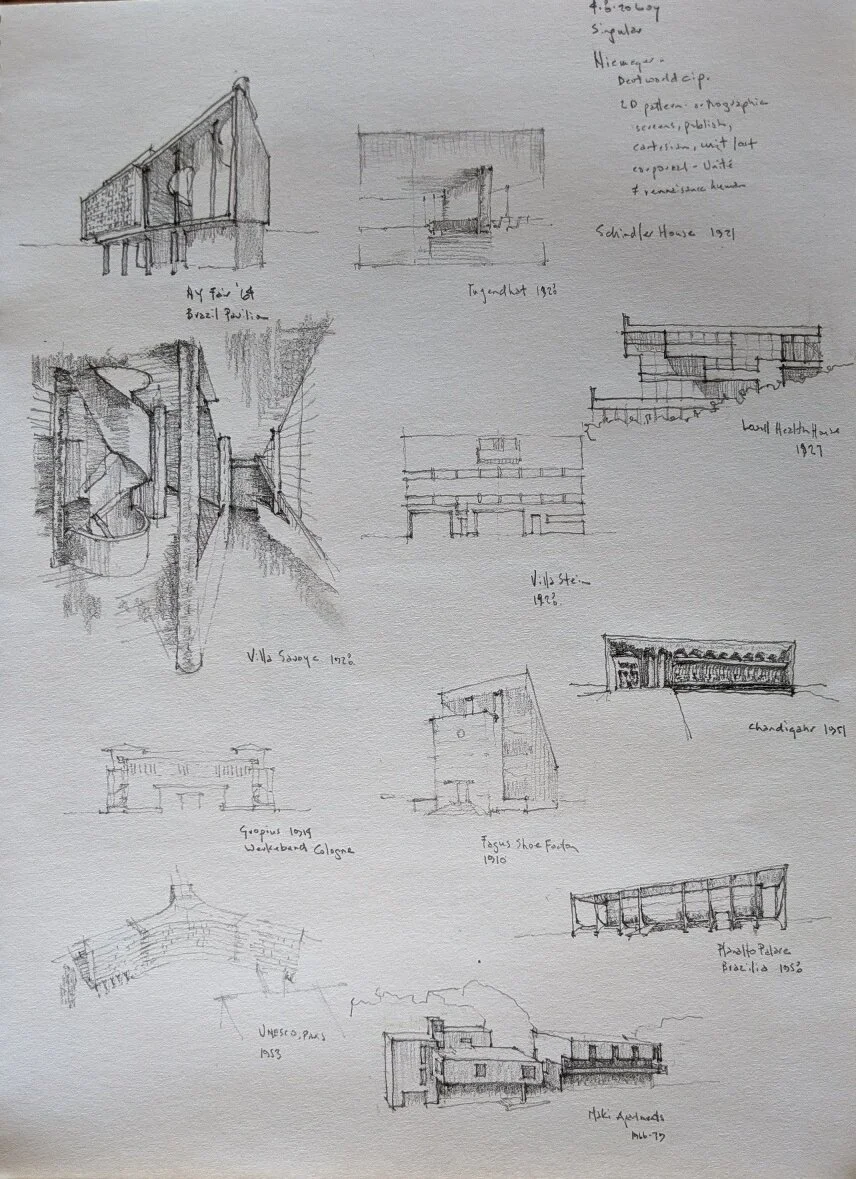
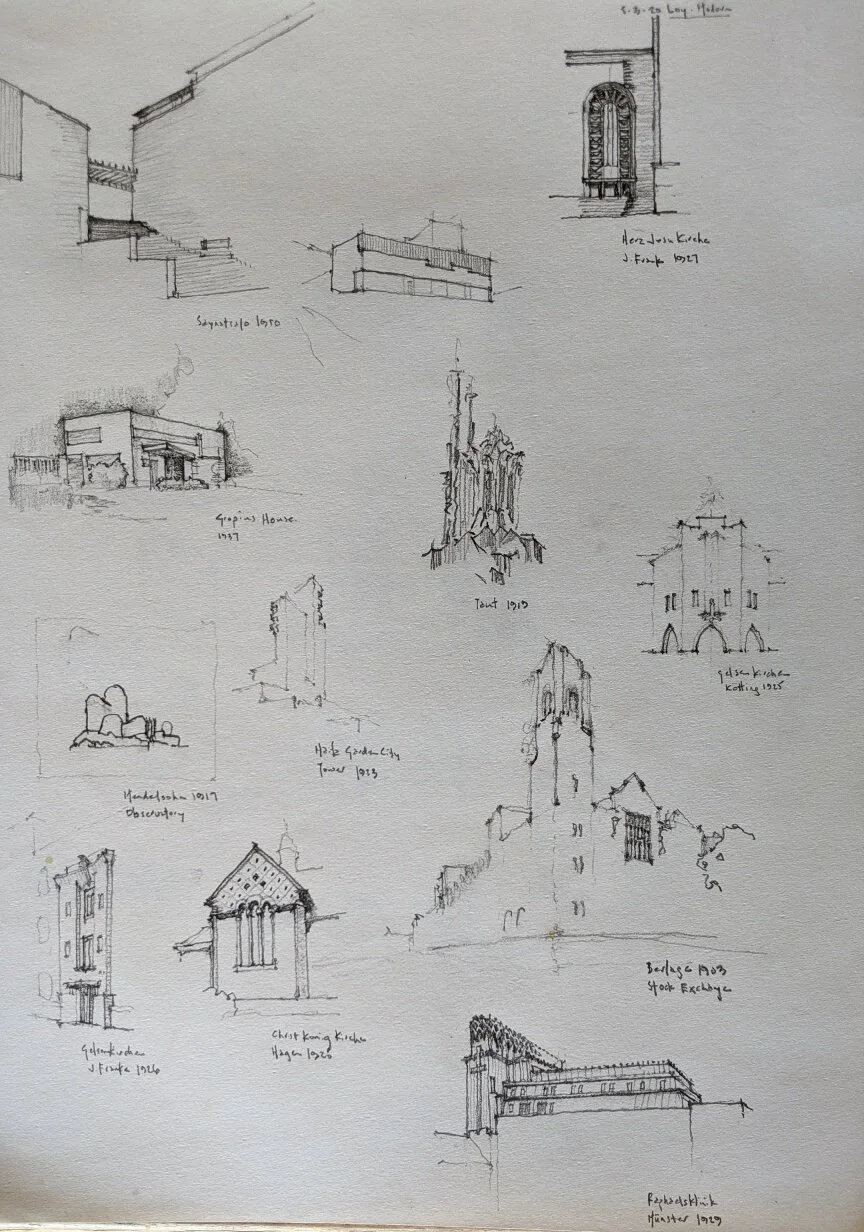
The 21st C has launched without aesthetic conviction, in a cloud of nostalgia and digital displacement. In preparation for a new Eagle Rock house design (below) these studies examine the optimism of 70-100 years before. Modernism ended into the present post-modern, and was the last idealistic and original creative movement. It celebrated light, freedom from gravity and a world of solutions.
Of special interest has been the Villa Shodhan from the 1950’s in Ahmedabad India by Le Corbusier. On a suburban parcel it rises on five platforms with five mezzanined apartments and sitting rooms, and multiply tiered garden roofs.
SKETCHBOOK